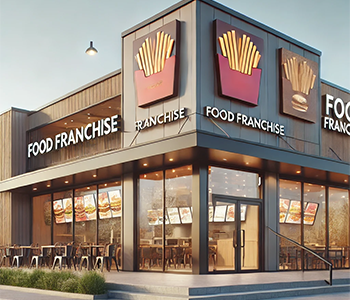
Why buy a Franchise?
“Franchising dates back to at least the 1850s; Isaac Singer, who
made improvements to an existing model of a sewing machine,
wanted to increase the distribution of his sewing machines. His
effort, though unsuccessful in the long run, was among the first
franchising efforts in the U.S. A slightly later, yet much more
successful, example of franchising was John S. Pemberton's
franchising of Coca-Cola. Early American examples include the
telegraph system, which was operated by various railroad
companies but controlled by Western Union, and exclusive
agreements between automobile manufacturers and operators of
local dealerships.”
Why Franchise?
As a business franchise network expands, its stature in business
becomes bigger. Mall owners prefer to have popular franchises in
their malls because they want to present their shopping centers
as a one-stop-shop where everything that customers want can be
bought. Therefore, a franchisee will encounter very little
difficulty in obtaining a lease in ideal locations. Because a
franchisee becomes part of the giant image of the parent
company, he will probably find that running a franchised
business is not only so much easier than being on your own, it
can also be the best decision a franchisee has ever made.
Minimized Business Risks – Because the franchisee is buying a
proven business concept, the business risks involved are largely
minimized. The parent company has already resolved most, if not
all, of the problem areas in its systems and procedures. What
the franchisee is getting is a refined package of technical
expertise, marketing strategies, and operational systems.
A Unified Set of Quality Standards – All business franchise
units are required to maintain a single set of quality standards
insofar as product, customer care, and service are concerned.
Here, the company will ensure that these standards are strictly
adhered to and maintained in all its business franchise units so
that the whole network presents an image of providing quality
products and services.
Benefits for the Franchiser - Franchising is a business concept
that benefits the two parties involved. For the franchiser,
franchising is advantageous because rapid growth can be more
feasible even with minimum capital expenditures. When
franchisees pay the franchiser for the chance to copy a proven
business strategy, franchisers receive a steady flow of cash
from royalties, which can be used to expand further. Franchising
a business can be like hitting two birds by the same stone: a
business franchise is being paid to expand it. Moreover, because
others operate individual retail stores of the business that the
franchiser originally established, direct managing
responsibilities become the obligation of the franchisee. Hence,
the franchiser will have more time in his hands to explore ways
to further develop and promote the business.
The only way to develop as quickly is through franchising.
Expansion is the only way a company can realize maximum profits.
In franchising, there are not many obstacles to stunt the
expansion of a company, therefore, there is a big possibility of
really expanding the business franchise network not only in the
country but also even overseas. At present, franchising is the
only business concept that can make that possible. Franchised
businesses grow rapidly, sometimes having several outlets in a
certain area, pushing the competition out. All these benefits
for the franchiser are, in turn, advantageous to the franchisees
since the franchises are largely dependent on the success and
stature of the parent company.
No other business concept can offer such an attractive and
beneficial arrangement.Interested in receiving a Free
Franchise Consultation?
Visit this page.
|